
Cultivating a Sustainable Future
Diggin' into the root zone of a food forest garden


Hey y’all, welcome to the last installment of our journey through the enchanted realm of your food forest gardens. Today, we’re gonna dive deep into the underground rhizopheral layer of a forest garden. It’s like a bustlin’ community beneath the surface, where edible roots, rhizomes, and tubers work their magic. This underground kingdom is the heartbeat of the forest garden, pulsatin’ with life and energy.
This root layer ain’t just some hidden treasure, it’s a key player in the symphony of a successful forest garden. By nurturin’ this underground rhizopheral layer world, we’re pavin’ the way for a thriviin’ ecosystem above ground.
As we explore the depths of the rhizopheral layer, we’re uncoverin’ a world teemin’ with edible roots and essential soil interactions. This layer ain’t just about roots, it’s about connection. It’s connectin’ plants, nutrients, and soil in a dance of sustainability. By understandin’ and carin’ for the rhizosphere, we’re unlockin’ the key to a flourishin’ permaculture and forest garden.
So next time you’re strollin’ through yer forest garden, remember to look under your feet and appreciate the lively life below. The rhizosphere layer ain’t just some hidden gem. It’s the cornerstone of diversity, sustainability, and vitality in the enchanted world of forest gardens.
What is the rhizosphere?
The rhizopheral layer is that narrow strip of soil that’s directly affected by root secretions and all them associated soil critters. It’s the soil layer right around plant roots, y’all. It’s an area known for its high microbial activity, a zone of intense biological shenanigans where plant roots interact with soil particles, nutrients, and a diverse community of microorganisms.
In this area, roots release all sorts of compounds that can attract beneficial microbes, change soil pH, and affect nutrient availability. It’s plum important for plant growth and health by facilitatin’ nutrient uptake, protectin’ against nasty pathogens, and contributin’ to soil structure.
This dynamic environment is crucial for the overall health and productivity of plants in various ecosystems. It’s like the engine room of your forest garden, keepin’ everything runnin’ smooth as butter.
Benefits of edible roots
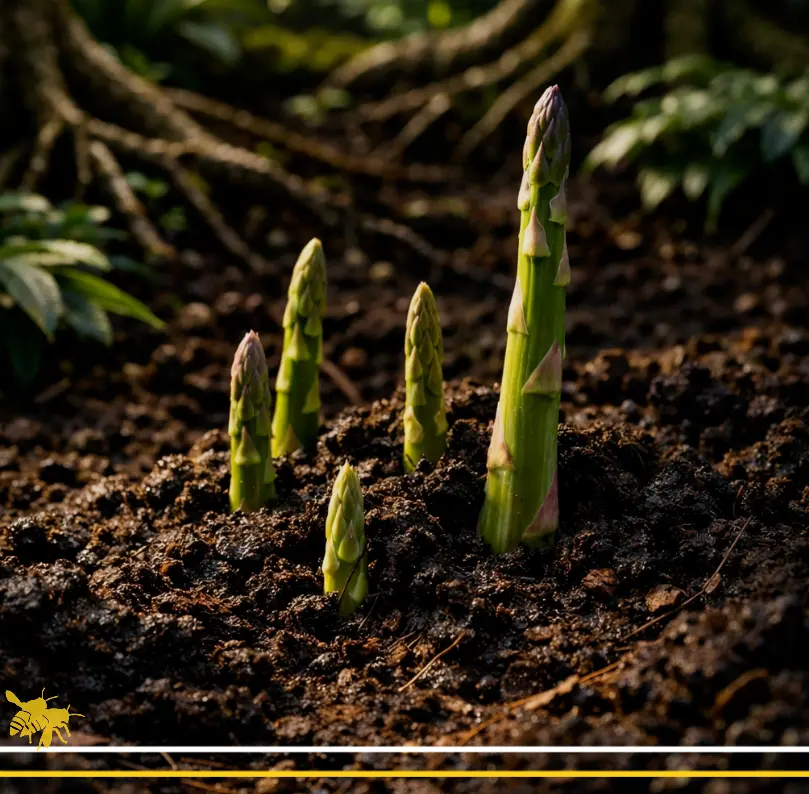
Asparagus
Asparagus is a perennial vegetable that contributes to the health of the soil by improving its structure and nutrient content.
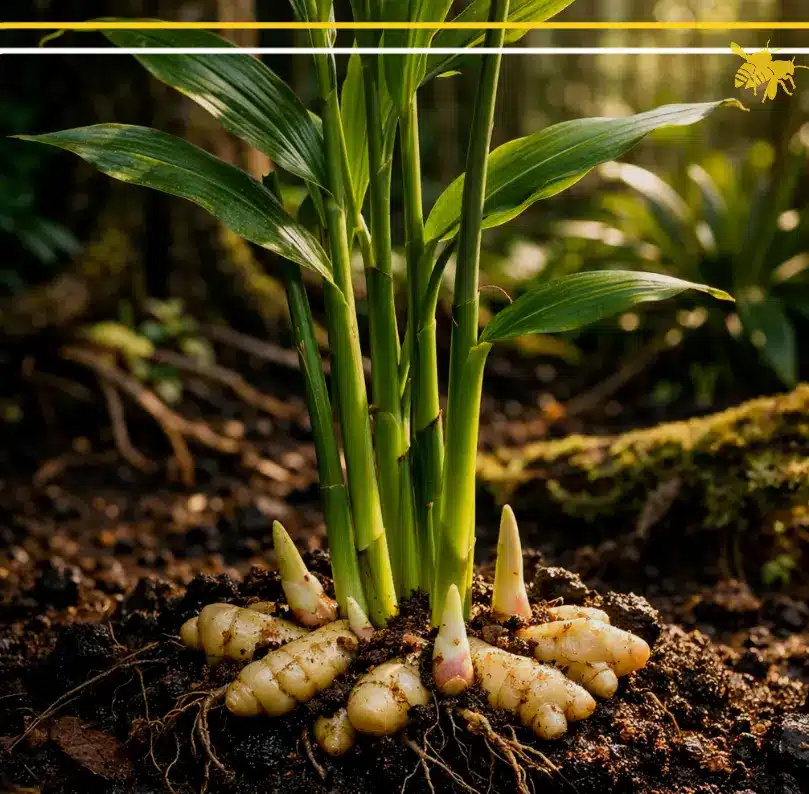
Ginger
Ginger is known for its medicinal properties and helps enrich the soil with its nutritious roots.
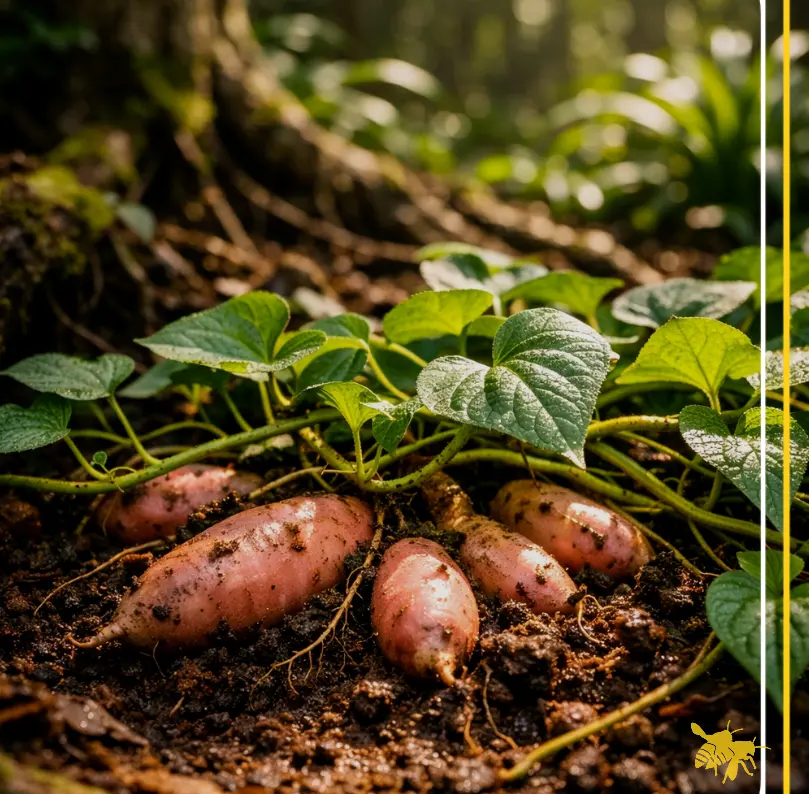
Sweet potato
Sweet potatoes are a nutritious tuber that helps improve soil structure and promote biodiversity.
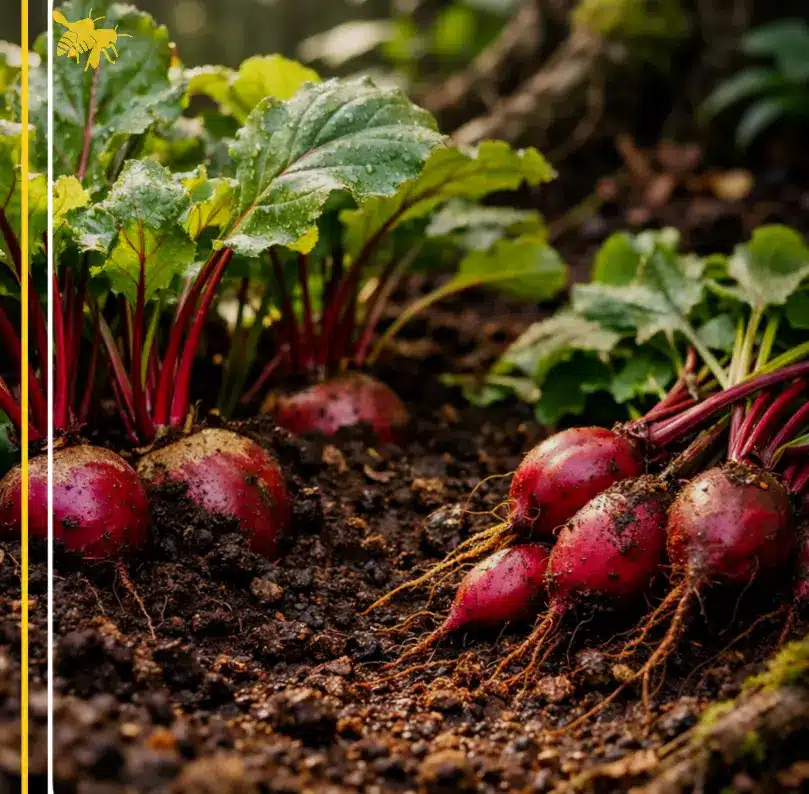
Beetroot
Beets are rich in vitamins and minerals, and their cultivation helps maintain a healthy soil environment.
Let's explore our edible roots
Here’s a list of some easy to grow edible roots, rhizomes, and tubers that’ll make your forest garden the talk of the town.
Carrot
Radish
Horseradish
Beetroot
Potato
Asparagus
Ginger
Sweet potato
Bamboo shoots
Jerusalem artichokes
Now, these underground critters ain’t just tasty, they’re doin’ a whole lot of good for your garden too. They’re like the unsung heroes, workin’ hard beneath the surface to keep everything growin’ strong.
The magic of the rhizosphere and all you can eat buffet
Y’all, let’s dive into the underground magic of your forest garden! The rhizopheral layer ain’t just some fancy word, it’s the heart and soul of what makes your garden thrive.
Think of the rhizosphere as a bustlin’ underground marketplace. Your plants are dealin’ out sugars like candy, and in return, they’re gettin’ all sorts of goodies from friendly bacteria and fungi. It’s like a big ol’ potluck where everyone brings somethin’ to the table.
Imagine your plants havin’ access to an all you can eat buffet of nutrients. That’s what a healthy rhizosphere does! It’s got a whole crew of tiny critters breakin’ down stuff that plants couldn’t normally munch on. This means your plants are gettin’ healthier and tougher, just like eatin’ your greens makes you strong.
Soil health. The rhizosphere is like nature’s own pharmacy, keepin’ your soil healthy and kickin’. It’s a lively community down there, with roots and microbes doin’ a dance that’d make any hoedown look tame4. This underground party is what keeps your forest garden growin’ strong.
Disease resistance. A thriving rhizosphere is like havin’ a top notch security system for your plants. The good microbes keep the bad ones in check, kinda like how the neighborhood watch keeps an eye out for trouble5. This natural defense helps your forest garden stay healthy without needin’ to call in the chemical cavalry.
Now, I know all this might sound as complicated as rocket science, but don’t you worry your pretty little head about it. By takin’ care of that rhizosphere layer, you’re settin’ up your forest garden for success. It’s all about creatin’ a happy family down there in the soil, where everyone works together to keep things growin’ strong and healthy.
So next time you’re out in your forest garden, give a little nod to what’s happenin’ beneath your feet. That underground world is workin’ harder than a one armed wallpaper hanger to keep your garden thrivin’. And that, my friends, is the real magic of the rhizopheral layer in your food forest garden.
Frequently asked questions
How do I prepare the soil for planting root vegetables?
Start by loosening the soil to a depth of at least 30 cm and removing any stones. Add organic compost to enrich the soil and improve drainage.
What is the best time to plant root vegetables in a woodland garden?
Most root vegetables can be planted in early spring or late summer, depending on the specific plant’s growing season and your local climate.
How often should I water?
Water deeply once or twice a week, making sure the soil remains moist but not soggy. Adjust the frequency based on rainfall and temperature.
What are the most common pests?
Common pests include the same ones you would find in a regular kitchen garden, such as caterpillars and aphids. Use natural pest control methods like companion planting to deter them.
How do I know when my root vegetables are ready to harvest?
Check their size by gently brushing off some soil. Most root vegetables are ready when they reach mature size and the tops start to wilt back.
Can I grow root vegetables in shaded areas of my woodland garden?
Yes, some root vegetables like beets and radishes can tolerate some partial shade, but most prefer full sun for optimal growth.
How do I store harvested root vegetables?
Store them in a cool, dark, and humid place. A basement or garage is ideal. Make sure they are clean and dry before storing.
What are the benefits of planting root vegetables in a forest garden?
Root vegetables improve soil structure, boost biodiversity, and provide you with a nutritious food source, contributing to a more sustainable ecosystem.
How do I prevent diseases?
Rotate your crops annually, aim for good air circulation, and avoid overhead watering to minimize the risk of fungal diseases.
What our garden enthusiasts say
Growing ginger and Yacon in my forest garden has been a rewarding experience. The rich soil and natural ecosystem have produced the most aromatic roots I have ever tasted.

Peter
I started with sweet potatoes, and the harvest was more than plentiful. The forest garden environment seems to enhance its flavor and texture, in my opinion.
Ji-A
The variety of crops I have been able to grow is incredible. Every season brings me new exciting surprises and flavors.
Yared
The root of it al
So, there you have it, folks. The grand finale of my food forest garden series. We’ve dug deep into the underground world of the rhizopheral layer, and I hope y’all are as excited as a kid on Christmas morning to get out there and start plantin’.
Remember, this underground layer ain’t just some afterthought, it’s the backbone of your whole food forest garden operation. By plantin’ a variety of root crops and takin’ care of that underground ecosystem, you’re settin’ yourself up for a garden that’ll be more productive than a beaver in a lumber yard.
These roots and tubers ain’t just good eatin’, they’re helpin’ to make your soil richer than a Texas oil baron. They’re aeratin’ the soil, feedin’ those helpful fungi and bacteria, and makin’ sure your whole garden is healthier than a horse.
Now, as we say goodbye to this series, I want y’all to take this newfound knowledge and nurture your forest gardens like they’re your own kin. We’re not just gardenin’ for ourselves, but for the generations to come.
Until we meet again, may your garden dreams be as sweet as a Georgia peach. If you’ve got any questions, just holler in the comments below. Happy gardenin’, dear friend…