
Discover the art of polyculture gardening
Transform your garden into a thriving ecosystem with the principles of polyculture. Embrace the harmony of nature and watch your plants flourish together.
Hey there, fellow garden lover, welcome to a world where nature’s our main teacher and our biggest inspiration. Here on my little corner of the internet, Alhaga Homestead, I’m sharin’ my passion for growin’ with nature as the blueprint.
This here’s part one of a two‑part series on polyculture and holistic fruit growin’. In this piece we’ll walk through the basics: what polyculture is, why it packs such a punch, and how it’s different from conventional farmin’. In the next part, we’ll dive into how you can put these ideas to work, includin’ holistic fruit‑growin’ and plannin’ your own guilds around trees. So let me take ya on a little ride through the world of polyculture, a journey that might just change the way you see growin’ food. If you’re curious about a more self‑sufficient life, polyculture’s a topic well worth diggin’ into.
All them fancy words
In the beginnin’, all these terms can feel a mite overwhelming. Permaculture, polyculture, homesteading, urban homesteading, self‑sufficiency – just to name a few. So where do you fit in all this, you might wonder? Truth is, a lot of it goes hand in hand, but the most important thing is what makes you happy and what you enjoy doin.’

What polyculture is, plain and simple
Polyculture is a big part of permaculture’s philosophy and practice, and it stands in sharp contrast to conventional monocultures. In a monoculture, only one type of plant is grown. You see this on almost every big farm ya pass when you’re drivin’ down the highway. A tomato farm grows tomatoes. An apple orchard grows apples. This method makes plantin’ and harvestin’ easier, especially when machines are doin’ most of the work.
Now picture a place where plants work together in perfect harmony, where every species plays its own unique part in a grand ecosystem. That, my friend, is the heart of polyculture – a way of growin’ that doesn’t just challenge our usual ideas about farming. It opens the door to a more sustainable and productive future, from monoculture to diversity.
Forget the old school way of growin’ just one crop over big or small patches of land. Polyculture flips that idea on its head by embracin’ nature’s own wisdom, buildin’ a livin’ neighborhood of different plants that support and enrich each other.
The apple tree circle
Imagine an apple tree standin’ in the middle of a circle of loyal buddies. In a monoculture system, grass is usually what grows around that apple tree. But grass is a plant that doesn’t play nice with apples. In a polyculture guild, we swap that grass out for plants that don’t compete with the apple tree. Or even better, plants that help it in some way.
Here, comfrey thrives with its big, shady leaves and deep roots that don’t fight over surface water, while clover fixes nitrogen in the soil. Every plant’s got its own part in this little show, and the result ain’t nothin’ short of magic. Just a swift note: Symphytum uplandicum (upland comfrey) can be mighty invasive here in Sweden. If you wanna grow comfrey, look for true comfrey, Symphytum officinale. So with that said, be careful where you get your plants at and alway buy at a trusted source.
This way of plantin’ is called companion plantin’, where companion plants are a help because they don’t compete with the main crop.
The forest garden I’ve written about a bit here on the blog is a central form of growin’ in permaculture and a perfect example of a perennial polyculture made up of multi function plants. This system uses different plant layers to max out productivity and create a self‑sufficient ecosystem.
In other words, a guild is a harmonious mix of species gathered around a central element – either a plant or an animal. This little community acts in relation to that element to help its health. Think of it as a big, happy family. That’s the goal for your guild.
To me, the important thing is plantin’ species that fit my microclimate and my needs. Plants should serve a purpose more than just lookin’ pretty when they bloom.

The apple tree circle
Polyculture is a big part of permaculture’s philosophy and practice, and it stands in sharp contrast to conventional monocultures. In a monoculture, only one type of plant is grown. You see this on almost every big farm you pass when you’re drivin’ down the highway. A tomato farm grows tomatoes. An apple orchard grows apples. This method makes plantin’ and harvestin’ easier, especially when machines are doin’ most of the work.
Now picture a place where plants work together in perfect harmony, where every species plays its own unique part in a grand ecosystem. That, my friend, is the heart of polyculture – a way of growin’ that doesn’t just challenge our usual ideas about farming. It opens the door to a more sustainable and productive future, from monoculture to diversity.
Forget the old school way of growin’ just one crop over big or small patches of land. Polyculture flips that idea on its head by embracin’ nature’s own wisdom, buildin’ a livin’ neighborhood of different plants that support and enrich each other.
Why polyculture’s the tune of the future
Picture a garden that stands up to pests and dances gracefully in the wind. Greater resilience comes naturally when you copy nature’s own diverse ecosystems. Plants that watch over each other and keep diseases and pests at bay, just like in a wild meadow.
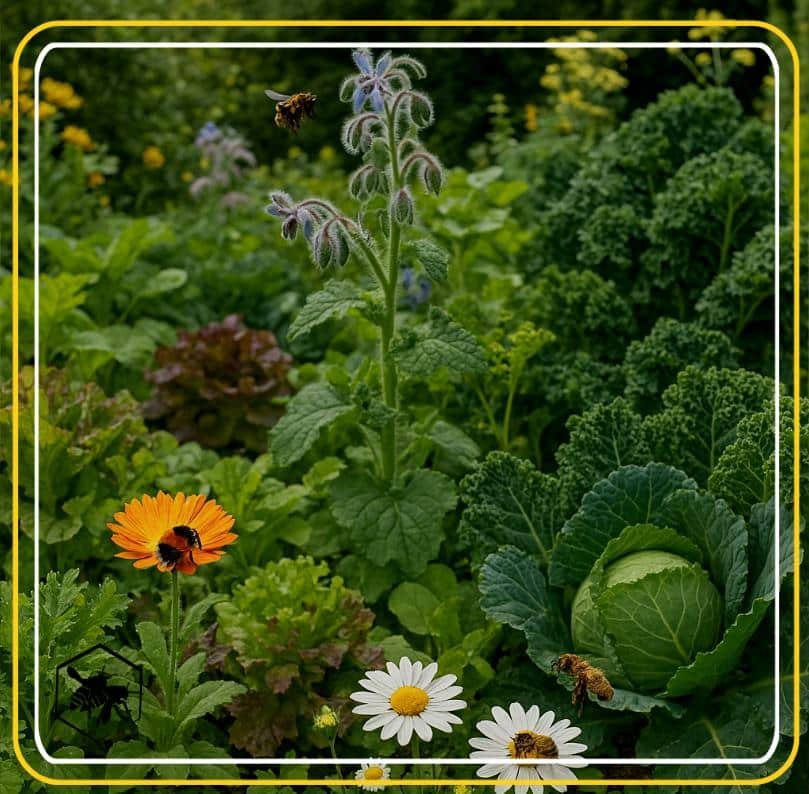
Resource efficiency becomes a given. Polyculture makes every sunbeam, every drop of water, and every bit of nutrients count – nothin’ like the sleepy dreams of efficiency you get in monocultures. Here, everything works in harmony, layer on layer.
And biodiversity? That’s the heartbeat of the whole thing. Every little polyculture patch becomes a livin’ treasure chest. Bees buzz happily, predators hunt pests, and the soil breathes life.
Key features of polyculture gardening
Plant cooperation
Polyculture gardens thrive on the mutual benefits plants provide each other, such as pest control and nutrient sharing.
Biodiversity benefits
Enhance your garden’s resilience and productivity by cultivating a diverse range of plant species.
Space utilization
Optimize your garden layout by layering plants of different heights and growth rates for maximum efficiency.
Ya don’t need a big farm to give this a try. Test it out in your backyard or kitchen garden this spring. Start small with a “mini guild.” Carrots with onions, beans climbin’ up corn, marigolds standin’ guard. Let curiosity lead, and before long you’ll see the magic unfold right before your eyes. Dear grower, when you stop tryin’ to boss nature around and start listenin’ with an open heart. The door swings wide to abundance, beauty and a future where the land gives back.
Navigating the Challenges of Polyculture Gardening
From theory to dirt under your nails
A garden symphony in three dimensions
A polyculture planting doesn’t just try to use 2D space smartly; it puts a lot of weight on 3D space. A normal monoculture mainly thinks about how far apart to place each plant in rows. Between those plants you usually find bare soil, mulch, or compost.
A polyculture, where every square inch hums with energy and abundance, takes into account that different plants grow at different heights and uses that to its advantage.
Think back to that apple‑tree example from the guild discussion, with a garden reachin’ up toward the sky in layer after layer of green life. The tallest member in that guild is clearly the apple tree, and there’s a whole lot of space between its lower branches and the ground. A guild tries to fill that space with useful plants.
A tasty kind of co‑existin’
The biggest win is probably the harvest you can pull from a given area under the apple tree’s protective branches. Usin’ the whole volume of a 3D space boosts the possible yield from that patch of ground. Instead of just apples, you’ll be harvestin’ fragrant herbs (like dill), veggies (like onions or their kin), medicinal herbs (like thyme), and low‑growin’ berries (like strawberries). This ain’t just a garden, it’s a feast for the senses. A treasure chest of flavors, scents and textures for ya. Your family, and the critters on the farm. And the best part? Every plant’s got its own role in this ecological masterpiece. And this is just one example of a single guild. The possible combos are near endless.
Another big plus is the health of the ecosystem. Remember, ecosystems are naturally diverse, built on biodiversity. A single crop is an unnatural experiment. Take a walk through a monoculture farm after harvest. All you’ll see is a moonscape, barren and lifeless.
In a polyculture, there are always livin’ plants protectin’ the soil, feedin’ it, and givin’ shelter to insects, worms, and all the little critters that belong. The result is soil that breathes easy, builds up nutrients, and gets richer year after year.
Nature’s own orchestra
Lastly, plant health improves in a guild where specific plants are grown together just to help each other. For example, marigolds and other plants with lots of flowers draw all kinds of pollinators to the apple tree, plus insects that love huntin’ pests. Fewer pests means healthier plants. In the same test guild, comfrey grows with its broad leaves shading the soil and holdin’ in moisture, while its deep roots pull up nutrients from down deep. This ain’t just growin’; it’s a dance with nature itself, where every step leads to more abundance and vitality.
Here you can also see the link to holistic fruit growin.’ Where fruit trees are the center of this livin’ ecosystem – where ground covers, nitrogen fixers and pollinator magnets all work together. That way ya ain’t just creatin’ richer harvests, you’re buildin’ a whole system that gets stronger and more resilient over time.
The hiccups along the way
There are a few bumps in the road, but they’re worth every minute. Plannin’ a polyculture is like puttin’ together a livin’ puzzle. The pieces move, cooperate, and change with the seasons. The first time it can feel overwhelming, which plants go together? How do ya fill the gaps without makin’ a mess? But just imagine the joy when it all clicks into place – a lush, self‑regulatin’ oasis that barely needs your hand.
Compared to monoculture, where plan‑nin’ is as simple as an A4 list:
Pick your variety by hardiness zone.
Check plant spacing on the seed packet.
Done!
Plant, water, harvest.
In polyculture ya lean on cooperation instead:
Layer on layer: Tall beans shield dwarf beans, marigolds keep nematodes away from your carrots.
Timing: Fast growin’ lettuce under currant bushes, then potatoes that take over later.
Space puzzle: Mix 3–5 buddies per square meter, start with well known guilds like the “three sisters” (corn, beans, squash).
A good tip so ya don’t drown in the puzzle is to start small on a tiny patch with 3–4 plants you already love. Sketch a simple layout (tallest, shortest, climbers?) Then test it out, nature usually forgives little innocent mistakes. The challenges fade fast once ya see the bees show up and the weeds start to back off. Suddenly it ain’t work, it’s magic.

A puzzle full of possibilities
For a polyculture, ya gotta start the process with the biggest members of your system – usually a tree of some kind. Then you repeat the same steps for every other member of your guild. Then ya get to play detective and matchmaker at the same time. Which plants enjoy the company of your tree? Which ones can protect each other from pests?
On top of that, you gotta make sure the individual plant species don’t have any bad effect on the others in the guild. If your main tree is a black walnut, you’ll need plants that can handle juglone, a toxin the tree produces that can kill other plants around it. Juglone’s strong enough to hurt sensitive plants within 15 to 20 meters of a big tree.
Another challenge with polyculture is waitin’ for a harvest. Almost all guilds use trees as their main member. After plantin’ a tree, it can take years – or even up to a decade before you see a real bounty. That can be a long wait. Of course, the other members of the guild will start producin’ long before that, but even smaller trees like hazelnuts or berry bushes can take a few years to get serious.
Patience, nature’s own virtue
Yeah, it’s true that some parts of your polyculture can take time to get settled in. But think of it as an investment in the future, perhaps for your kids. While you’re waitin’ on your trees to grow big and strong, you can enjoy the fast growin’ herbs and ground covers. Every season will surprise ya with new discoveries and lessons.
With that said, you’re gonna need a good dose of patience, especially in the beginnin’ when it’s toughest ’cause you usually wanna get goin’ as fast as possible. But ya gotta let nature have its way.
Every challenge is a chance to learn somethin’ new. When ya figure out which plants like to hang out together, when ya find clever ways to max out your space, when you see your first real harvest. Then you feel a kind of satisfaction most other ways of growin’ just can’t match.
Join Alhaga gardening community
I invite you to share your polyculture gardening experiences and insights in the comments below. By exchanging ideas, we can learn from each other and cultivate a vibrant community of gardening enthusiasts. Your contributions can inspire others and help us all grow better gardens together.
What’s comin’ in part 2?
In the next part, we’ll take a closer look at how you can put polyculture and holistic fruit‑growin’ into practice. I’ll walk ya through how I’m plannin’ out my own garden at Alhaga, even though I still don’t have a finished garden yet. ’Cause I’m still in the plan‑nin’ phase. That makes it the perfect time for you, the reader to be part of Alhaga’s future.
I’d love to hear your ideas on which plants you think work well in a guild around an apple tree or another fruit tree. Whether it’s ’cause they’re tasty, medicinal, good ground cover or just plain pretty. Drop your thoughts in the comments down below. Let’s build a homestead garden together that’s delicious, healthy, and beautiful.